Periodontics
Periodontal disease affects approximately 60% of people in Italy, predominantly between the ages of 40 and 60, though it can develop earlier.
Periodontics is the branch of dentistry concerned with the treatment of diseases affecting the periodontium (the tissues surrounding the tooth).
The periodontium is the group of tissues that keep the tooth anchored to the alveolar bone and consists of:
- gums;
- periodontal ligament;
- root cementum (the tissue covering the root);
- alveolar bone.
Periodontal disease, especially in its early stages, does not typically cause discomfort or pain. For this reason, regular check-ups are essential to detect it as early as possible while it is still in its initial phase.
One of the first warning signs, for instance, is gingivitis—the inflammation and bleeding of the gum tissue, most frequently caused by bacterial toxins within plaque. If left untreated, gingivitis can progress to periodontal disease (periodontitis).
Gingivitis – Symptoms
- redness of the gingival margin;
- edema (swelling);
- bleeding;
- occasionally, gingival enlargement (overgrowth);
- halitosis.
These symptoms are fully reversible and can precede periodontitis.
Periodontitis – Symptoms
- halitosis;
- bleeding gums;
- tooth mobility (loss of attachment/bone);
- pocket formation;
- occasionally, the development of gingival recessions.
What causes periodontitis and gingivitis
In addition to having a familial component (genetic predisposition) or a metabolic link (diabetes and certain rare systemic diseases), periodontal disease is closely tied to lifestyle. Key factors that can influence its onset include:
- poor oral hygiene;
- bacterial plaque;
- smoking;
- certain medications that contribute to gingival enlargement (such as nifedipine, diphenylhydantoin, cyclosporine).
Effects of Periodontitis
Direct effects:
- halitosis;
- provoked or spontaneous bleeding;
- varying degrees of tooth mobility;
- xposure of the tooth necks (recessions);
- loss or avulsion of teeth (or any dental implants) irreversibly affected within the alveolar arch.
Indirect effects:
Several scientific studies and researches indicate a correlation between patients with periodontal disease and other pathologies or complications, albeit via an indirect link (as it is not yet fully scientifically proven as a direct cause):
- ertility issues and difficulties in conception (Easthman et al., 2015);
- poor metabolic control in diabetic patients who are not on insulin therapy;
- pulmonary/lung diseases (Perio Medicine Project – SIdP);
- recurrence of the Helicobacter bacterium in patients with gastric ulcers (Carinci et al., 2015).
Diagnosis and treatment
During the consultation, the dentist evaluates:
- medical and dental history (anamnesis);
- objective physical examination (assessing the presence of bacterial plaque, tartar/calculus, cavities, overhanging restorations, malpositioning, and dental crowding);
- periodontal probing, performed with a specialized probe along the entire circumference of each tooth between the tooth and gum (measuring metrics such as the depth of the gingival sulci and periodontal pockets, and bleeding on probing);
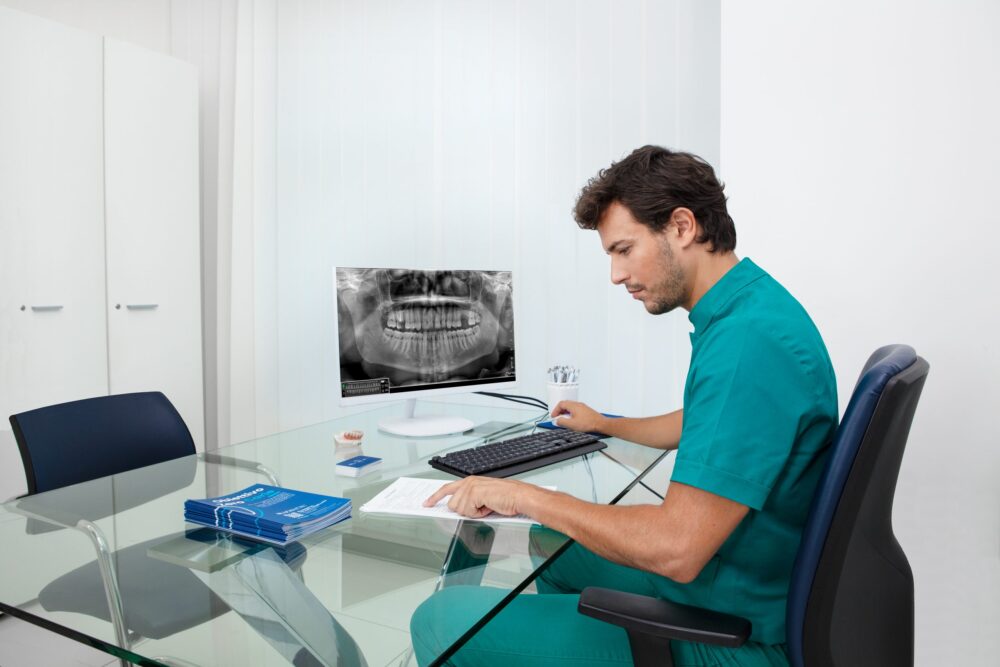
- full-mouth radiographic status (if required).
With this initial data, the clinician establishes the patient’s customized treatment plan and its subsequent phases. They may also evaluate the necessity of more in-depth tests, such as a microbiological analysis.
In the treatment of any periodontal issue, patient compliance and engagement are paramount. This means the patient’s conscious, active involvement in the healing process, which translates to meticulous home oral hygiene routines and continuous open communication with their dentist and dental hygienist.
Bludental centers are at your service for oral health care, offering a wide range of dental treatments. From standard teeth cleanings to aesthetic treatments like invisible orthodontics and teeth whitening, all the way to more complex procedures for dental implants and prosthetics.